Appliances · Buying Guide
Best Stainless Steel Electric Steamer Options for Family Meal Prep
Selecting a dependable stainless steel electric steamer involves balancing total cooking capacity against available kitchen counter space and heating element power ratings. These multi-tier appliances rely on varied wattage outputs, from compact 800-watt units to heavy-duty 1800-watt systems, to generate steam for vegetables, grains, seafood, and meats without relying on added cooking oils or constant stovetop monitoring.
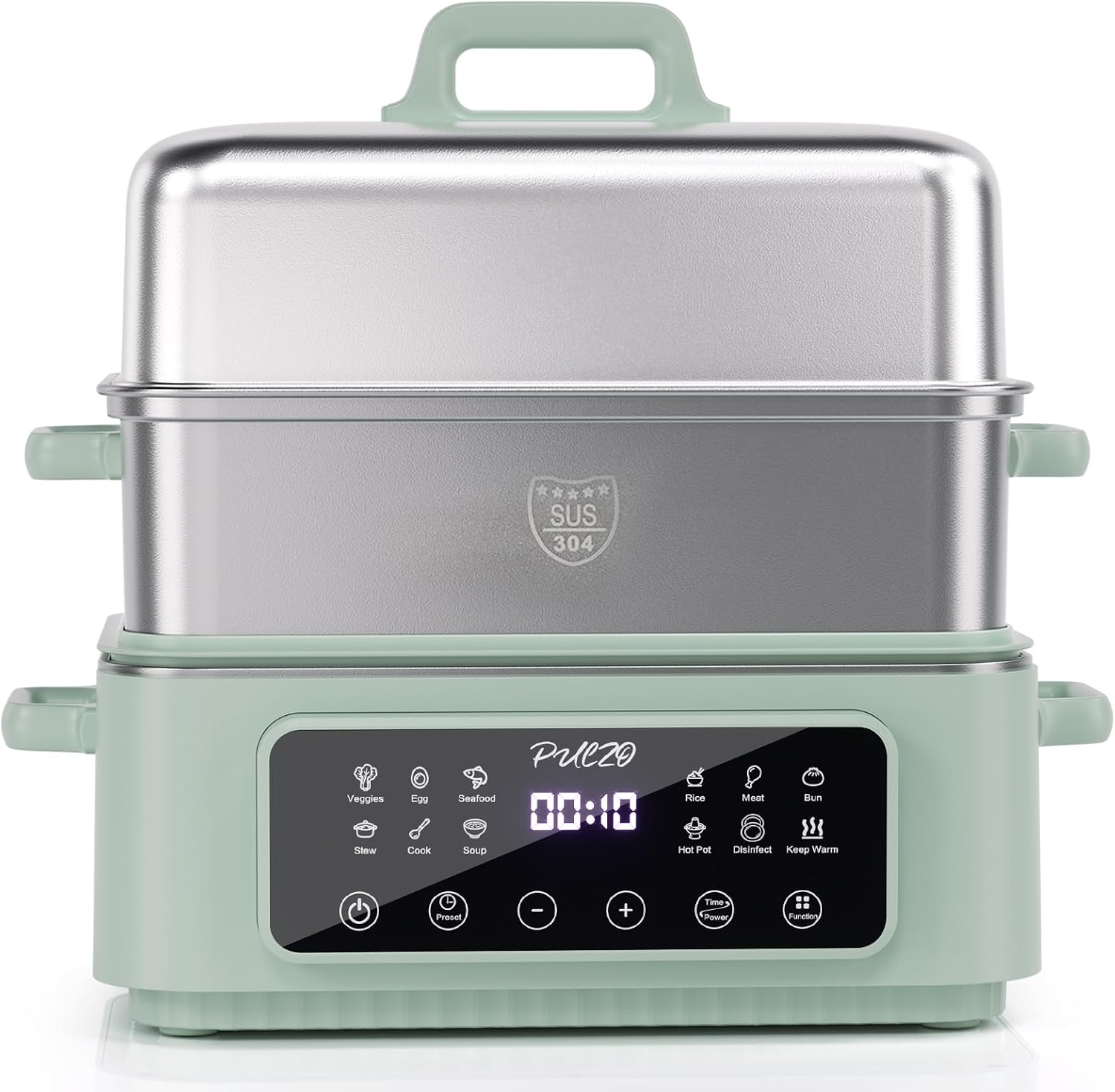
Modern designs incorporate distinct features like digital touch panels, analog dials, external water reservoirs, and dedicated bottom cooking pots for enhanced culinary versatility. Understanding how tray dimensions, water tank placements, and preset cooking modes align with daily routines helps buyers choose a model matching their specific household meal preparation demands.
As an Amazon Associate, StacyLaughs earns from qualifying purchases.
Buying guide
Capacity and Tier Configuration
Choosing the right capacity depends heavily on household size and typical weekly meal preparation habits. Double-tier models ranging from eight to eighteen quarts accommodate multiple food types simultaneously, separating vegetables from delicate seafood to prevent unwanted flavor transfer during cooking. Smaller capacities fit compact kitchens easily, while larger units handle multi-course family dinners with dependable daily efficiency.
Buyers must carefully measure available vertical and horizontal kitchen counter space before selecting a multi-tier steamer. Taller vertical configurations require adequate clearance beneath upper wall cabinets during active operation. Evaluating how many food portions you prepare daily ensures the chosen tray dimensions match your actual cooking requirements without overcrowding workspace.
Heating Power and Wattage Output
Heating element wattage directly influences how quickly water reaches boiling temperatures and generates usable steam inside the appliance housing. Units rated around eight hundred watts provide steady performance for basic vegetable steaming, while higher-output systems operating between fifteen hundred and eighteen hundred watts deliver rapid steam within seconds of activation.
Selecting higher-wattage appliances significantly reduces total meal preparation time on busy weeknights and hosting events. However, users should verify that residential kitchen electrical circuits can comfortably support heavy power draws without tripping breakers. Matching the heating output to your cooking speed expectations ensures reliable results across diverse recipes without unexpected kitchen delays or power drops.
Water Tank Design and Refill Access
Managing water levels during extended steaming sessions is essential for uninterrupted cooking performance and overall appliance safety. Models featuring external side water tanks allow users to top off reservoirs mid-cycle without lifting heavy lids or disturbing internal steam temperatures. This specialized design prevents heat loss and maintains consistent cooking times across complex multi-tier meal batches.
Alternatively, removable internal tanks offer straightforward sink filling before starting a recipe. Examining how easy it is to monitor water lines through clear viewing windows helps prevent accidental dry-boiling incidents during long cooking cycles. Choosing a convenient water delivery system streamlines your daily cooking routine and protects internal heating components from premature wear.
Control Interfaces and Preset Programs
Control panels dictate how simply you can program cooking times and manage active recipes throughout the week. Digital touchscreens and LCD displays provide intuitive access to preset functions for eggs, seafood, grains, and vegetables. These pre-programmed settings eliminate daily guesswork by automatically adjusting cooking durations for specific ingredients at the touch of a button.
Traditional analog dials offer a straightforward mechanical approach for users who prefer manual timer adjustments without navigating complex digital menus. Evaluating whether you prefer one-touch digital presets or simple mechanical knobs ensures the appliance matches your technological comfort level and daily recipe preparation preferences without causing unnecessary operational confusion during busy hours.
Material Construction and Cleanup
Material composition impacts both long-term durability and post-cooking maintenance convenience in busy home kitchens. Food-grade three-oh-four stainless steel trays and housings resist rust, withstand high heat, and provide toxin-free contact surfaces for family meals. Glass cooking pots offer alternative visibility while doubling as convenient direct table serving dishes after steaming completes.
Dishwasher-safe components significantly reduce post-meal cleanup effort by eliminating heavy manual scrubbing routines after dinner. Detachable trays and smooth metal surfaces allow users to clean up quickly after preparing large family dinners. Assessing material quality ensures your electric steamer maintains its appearance and structural integrity over years of regular household use without degrading or staining.
Safety Mechanisms and Auto-Shutoff
Built-in safety features protect both the user and the appliance housing during active cooking sessions throughout the week. Boil-dry protection sensors automatically pause or shut off the heating element when water levels deplete, preventing potential overheating damage to internal components. Anti-scalding handles and secure locking lids further minimize accidental burns during food retrieval and serving tasks.
These protective measures provide essential peace of mind, especially when managing multiple kitchen tasks simultaneously around the house with children. Reviewing included safety specifications ensures that your chosen electric steamer operates securely in busy household environments without requiring constant personal supervision by the cook during active operation.
Frequently asked questions
Can I cook different foods simultaneously in a multi-tier stainless steel electric steamer?
Yes, multi-tier electric steamers are specifically designed to cook various foods at the same time. You can place denser root vegetables or meats on the lower tier near the heating source while putting lighter vegetables or delicate seafood on the upper tray. However, you should consider individual cooking times so that faster-cooking ingredients can be added later or removed early to ensure everything finishes cooking perfectly together without overcooking or undercooking any single component in your meal.
How do boil-dry protection sensors work on these electric steamers?
Boil-dry protection sensors monitor the water level inside the reservoir during operation. If the water depletes completely, the internal safety mechanism automatically cuts power or pauses the heating element to prevent the appliance from overheating or sustaining permanent damage. This automatic shutoff feature provides essential peace of mind, allowing users to multitask around the house or manage other dinner preparations without needing to constantly stare at the water indicator line.
Are stainless steel steamer trays dishwasher safe?
Most food-grade stainless steel trays included with these electric steamers are rated dishwasher safe, allowing for convenient cleanup after family meals. Placing detachable metal trays directly into the dishwasher eliminates the need for heavy manual scrubbing. However, you should always consult the specific manufacturer guidelines provided in your user manual before washing components to ensure proper long-term maintenance and preserve the finish of your specific appliance model over time.
What is the benefit of an external side water tank on an electric steamer?
An external side water tank allows users to refill the water reservoir mid-cooking without lifting lids or removing food trays. Lifting steaming lids releases accumulated steam, which drops internal temperatures and extends total cooking time. By utilizing an external fill port, you can top off water levels seamlessly while keeping internal steam trapped, resulting in faster and more consistent cooking performance across complex multi-tier meal preparations during busy weeknight dinner routines.
How do I choose between digital touch controls and analog dials?
Choosing between digital touch controls and analog dials depends primarily on your personal preference for programming convenience. Digital touch panels and LCD displays offer pre-set cooking programs for specific foods, delay timers, and precise minute adjustments, making them ideal for automated meal planning. Analog dials provide a traditional mechanical approach with simple twisting knobs for users who prefer straightforward manual operation without navigating digital menus or electronic programming interfaces.