Appliances · Buying Guide
Best Stainless Steel Popcorn Maker Options for Movie Nights
Making popcorn at home brings authentic theater-style flavors right to your kitchen using simple stovetop methods and your favorite kernels. A quality stainless steel popcorn maker offers durable construction, reliable hardware, and even heat distribution for consistently crunchy snacks during family movie nights, casual weekend gatherings, and everyday snacking routines.
Choosing the right model depends closely on your specific cooktop type, desired batch size preferences, and preferred stirring mechanism options. Whether you prefer gearless designs, classic wooden handles, multi-layered metal bottoms, or induction-compatible pots, carefully exploring available options helps you select a durable, practical tool tailored to your home kitchen setup and snacking habits without unnecessary complications.
As an Amazon Associate, StacyLaughs earns from qualifying purchases.
Buying guide
Cooktop Compatibility
Checking your kitchen range before purchasing a stovetop popcorn maker ensures safe and efficient operation during every snack session. Gas and standard electric burners accommodate almost all traditional metal poppers without requiring special adaptations. Understanding your primary cooking heat source helps narrow down choices quickly and prevents frustrating performance mismatches when you are ready to prepare hot snacks for family members.
Induction cooktops require specifically designated magnetic bases to function properly and generate heat. Verifying range compatibility prevents heating issues and ensures consistent snack preparation across your household cooktop surfaces. Taking time to review manufacturer specifications regarding heat source compatibility guarantees that your chosen popcorn maker integrates smoothly into your existing kitchen routine without unexpected operational limitations.
Stirring Mechanism Types
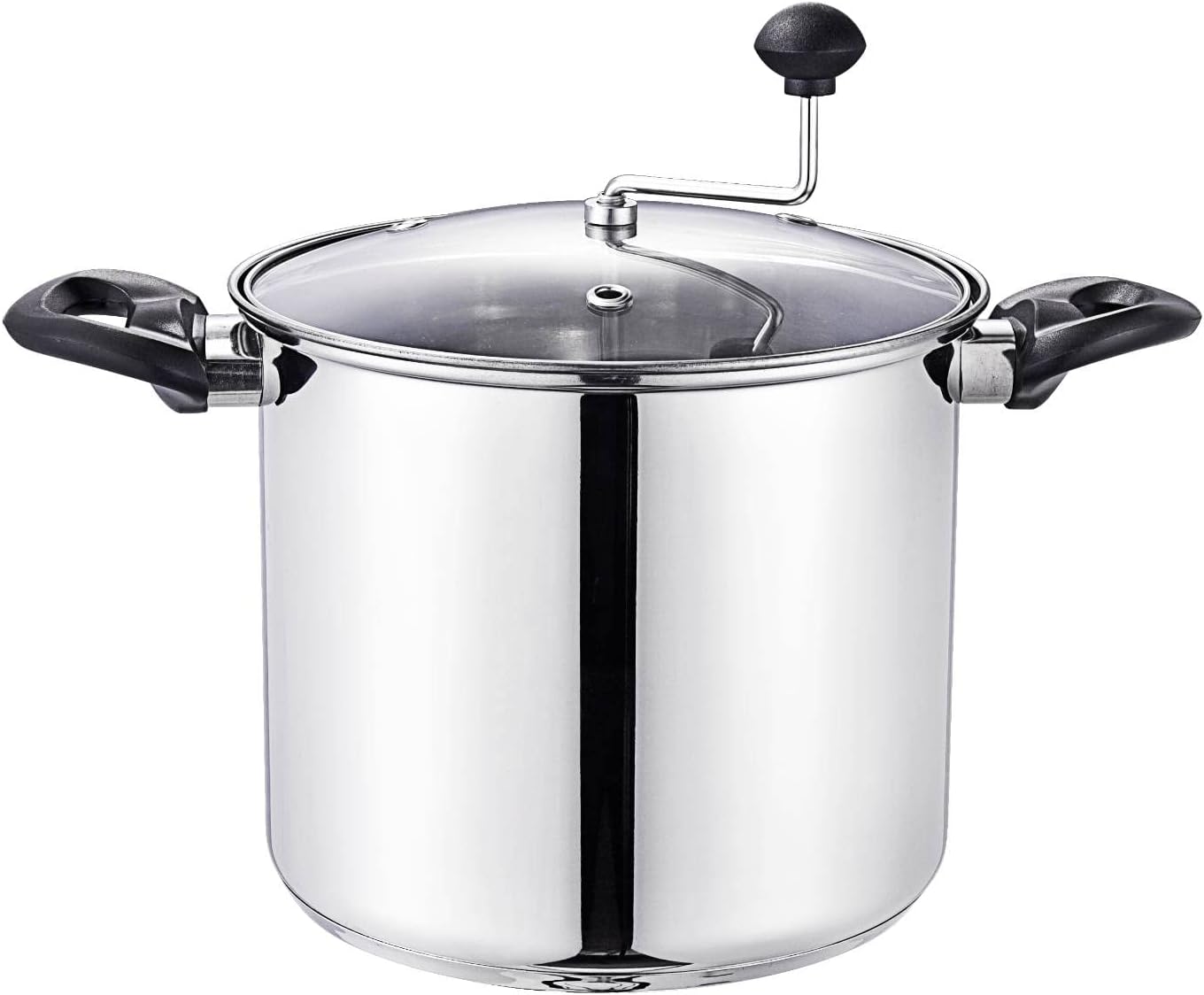
The internal stirring mechanism plays a major role in keeping kernels moving evenly across the hot pot bottom. Traditional models rely on metal gears, hand cranks, or rotating paddles to prevent scorching and unpopped grains. Evaluating how these turning systems operate lets you choose between gearless designs, classic hand cranks, or continuous spinners based on your personal preference for manual effort during cooking.
Smooth rotation reduces burning risks and helps achieve a light texture for your finished batch of popcorn. Some mechanisms feature bi-directional capabilities, allowing you to turn handles in either direction for added convenience. Selecting the right stirring configuration ensures that every kernel receives balanced heat exposure while you prepare movie-style snacks right on your stovetop without constant second-guessing.
Capacity and Batch Size
Selecting the correct capacity depends on how many people you plan to feed during movie nights or casual gatherings. Smaller pots around four to five quarts suit individuals or couples looking for modest snack portions. Larger six-quart models easily accommodate family-sized servings or hungry guests, reducing the need to pop multiple consecutive batches when entertaining friends on weekends.
Matching pot size to your typical household consumption prevents wasted food and unnecessary repetition. Keep in mind that stated capacities refer to total volume rather than final popped output, so a six-quart pot yields a specific quantity of fluffy snacks. Assessing your usual snacking habits guides you toward the ideal pot size for your kitchen storage and serving needs.
Material and Durability
Stainless steel construction provides long-lasting durability, corrosion resistance, and reliable heat conduction for stovetop popcorn makers. Unlike thinner aluminum pans, stainless steel withstands high cooking temperatures and resists dents during routine kitchen handling. Many models pair this sturdy metal with wooden handles or silicone grips to enhance user comfort while managing hot pots on active burners.
Choosing quality materials ensures your popcorn maker maintains its structural integrity through frequent use over many years. Premium multi-layered metal bottoms further improve heat distribution to minimize hot spots and burning. Investing in robust construction safeguards your kitchen tools against daily wear and tear while delivering consistent popping performance across countless movie nights.
Cleaning and Maintenance
Proper maintenance keeps your stovetop popcorn maker functioning smoothly and looking great in your kitchen. Some stainless steel poppers feature dishwasher-safe parts that simplify cleanup after snack time concludes. Other traditional models recommend simple wiping methods without harsh soaps to preserve seasoning or protective metal coatings according to manufacturer instructions.
Following brand guidelines for cleaning prevents accidental damage to internal gears, stirring rods, and exterior finishes over time. Allowing hot pots to cool completely before washing protects metal components from thermal shock and potential warping. Establishing a regular cleaning routine ensures your popcorn maker remains ready for the next movie night without lingering oil buildup or stubborn residue.
Storage and Dimensions
Evaluating physical dimensions, overall width, and handle lengths helps ensure your new popcorn maker fits comfortably inside kitchen cabinets or pantry shelves. Models featuring extended side handles or tall vertical profiles require dedicated storage space to prevent countertop clutter. Measuring your available cupboard clearance before purchasing prevents unexpected storage frustrations and keeps your kitchen organized.
Consider whether removable lids or compact frames make stowing the appliance easier between cooking sessions. Stovetop poppers come in various shapes, so checking length and height specifications ensures smooth integration into your existing kitchen layout. Thoughtful planning regarding storage dimensions lets you enjoy homemade snacks without sacrificing valuable cabinet real estate.
Frequently asked questions
Can I use regular cooking oil in a stovetop popcorn maker?
Yes, you can use most standard cooking oils with high smoke points when preparing popcorn on your stovetop. Oils such as canola, coconut, vegetable, and corn oil work effectively to pop kernels while imparting desired flavors. Avoid using oils with low smoke points, like extra virgin olive oil, because they can burn quickly under high stovetop heat and produce undesirable tastes. Always follow your preferred recipes and manufacturer guidelines to select the best oil type for your specific popcorn maker model and taste preferences.
How do I prevent popcorn kernels from burning during popping?
Preventing burnt kernels involves keeping the stirring mechanism in constant motion throughout the entire popping process. Most stainless steel poppers feature built-in stirring rods, paddles, or hand cranks designed specifically to circulate kernels across the heated pot bottom. Turning the handle continuously ensures even heat distribution and keeps individual grains from resting too long against hot metal surfaces. Additionally, removing the pot from the heat source promptly once popping slows down prevents residual heat from scorching your finished batch of snacks.
Are stainless steel popcorn makers dishwasher safe?
Cleaning requirements vary depending on the specific model and manufacturer instructions provided with your popcorn maker. Some modern stainless steel poppers feature dishwasher-safe components that allow for easy cleanup in an automatic dishwasher after use. However, many traditional stovetop models recommend washing by hand or simply wiping down the interior to preserve specialized gears, wooden handles, or exterior finishes. Always check the specific care guidelines supplied by the manufacturer before placing any parts into the dishwasher to prevent unintended damage.
Do all stovetop popcorn poppers work on induction ranges?
Not all stovetop popcorn poppers are compatible with induction cooktops, as induction ranges require magnetic metal bases to generate heat properly. While many modern stainless steel models explicitly feature induction-ready bottoms, older or traditional designs may lack this capability. You should always verify the manufacturer specifications for induction compatibility before making a purchase if your kitchen uses an induction cooktop. Selecting a compatible model ensures your pot heats correctly and delivers reliable performance on your specific kitchen range.
What is the difference in taste between stovetop and microwave popcorn?
Stovetop popcorn generally offers a fresher taste and allows you to control the exact ingredients, oils, and seasonings added during the popping process. Using a stainless steel pot lets you experiment with real butter, gourmet salts, and various popping oils without artificial additives commonly found in pre-packaged microwave bags. The continuous stirring action on the stove helps cook kernels more evenly, resulting in a light, crunchy texture that closely mirrors authentic movie theater popcorn right in your own home kitchen.