Appliances · Buying Guide
Best Toshiba Low Carb Rice Cooker Options for Daily Meals

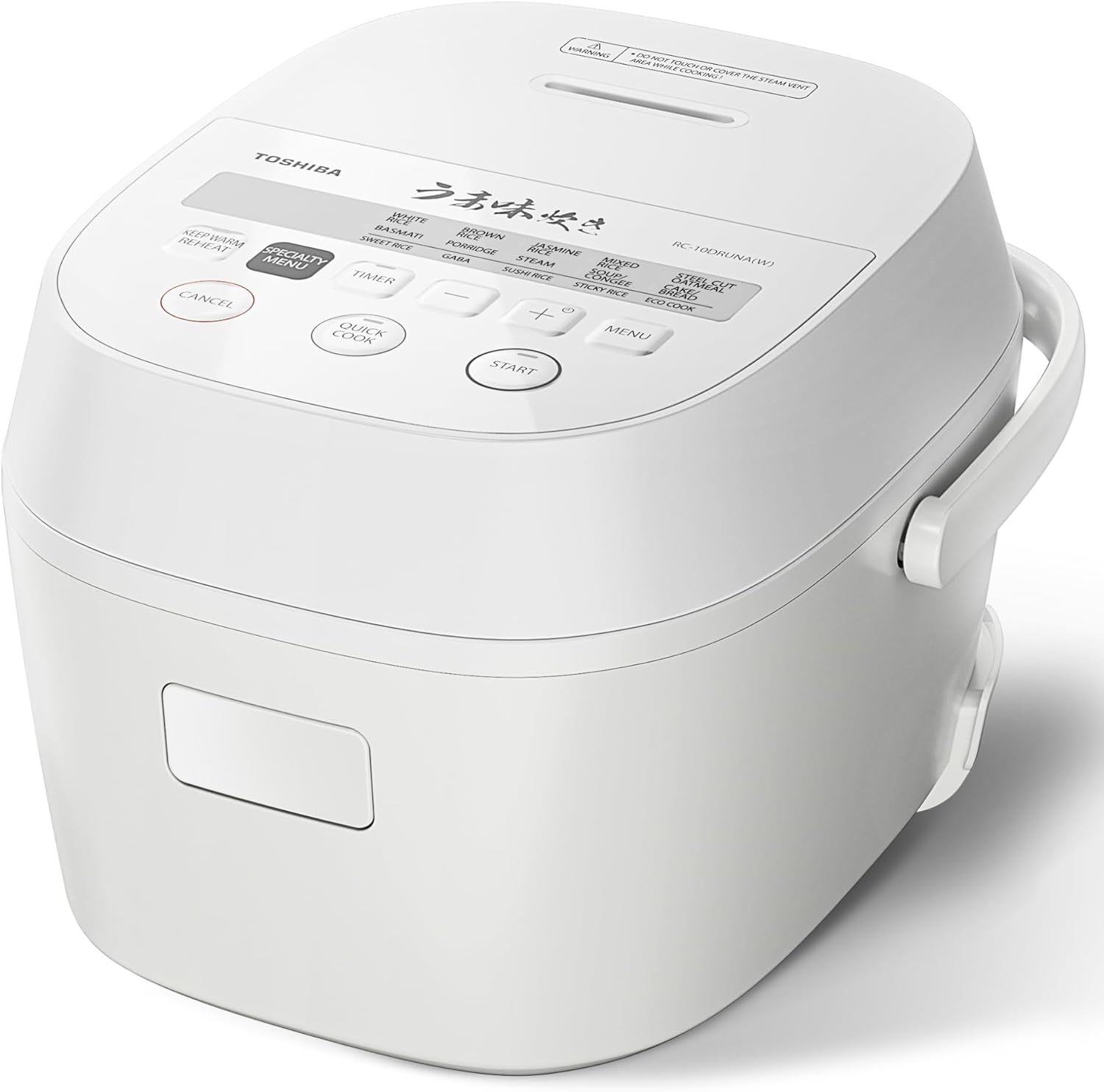
Finding the right appliance for preparing grains efficiently can transform how you handle everyday cooking tasks. Toshiba offers a diverse lineup of specialized cookers designed to accommodate different household sizes and dietary preferences, ranging from compact 3-cup models to high-capacity family units. Whether you are looking for advanced induction heating technology to manage specific starch levels or versatile multi-function controls for diverse recipes, understanding the core specifications helps match a machine to your kitchen routine.
Evaluating these appliances involves looking closely at physical dimensions, power usage, inner pot materials, and pre-programmed functions. Each model integrates distinct heating methods and capacity limits tailored to specific cooking volumes. By reviewing the practical attributes of these digital cookers, you can determine which configuration aligns with your counter space and meal preparation habits without relying on generalized claims.
As an Amazon Associate, StacyLaughs earns from qualifying purchases.
Buying guide
Evaluating Capacity and Household Size
Selecting the correct uncooked capacity depends directly on how many people you cook for regularly. Compact 3-cup models suit individuals or couples, yielding enough portions for small meals without cluttering counter space.
Larger 5.5-cup and 10-cup models accommodate families and gatherings, allowing you to prepare substantial grain batches in a single cycle. Matching the capacity to your typical serving volume prevents unnecessary food waste and storage crowding.
Understanding Heating Technologies
Different heating methods influence how thermal energy transfers to the inner cooking vessel. Induction heating models apply direct electromagnetic energy to the pot walls, delivering precise temperature adjustments and rapid heat distribution.
Standard fuzzy logic and 3D heating configurations utilize bottom, side, and lid elements managed by microcomputer sensors. These systems monitor internal moisture and adjust cooking parameters to maintain consistent textures across various grain types.
Comparing Program Functions and Presets
Modern digital cookers feature multiple preset functions tailored to specific ingredients such as white rice, brown rice, quinoa, and oatmeal. Specialized options like low-carb settings alter starch starch profiles during heating cycles.
Reviewing the available menu options ensures the appliance matches your dietary habits. Units with extended program lists also support steaming vegetables, slow cooking, baking cakes, and preparing soups within the same device.
Inner Pot Materials and Maintenance
The construction of the inner pot affects heat retention and durability during daily use. Options range from standard nonstick coatings to thicker ceramic layers and Binchotan carbon-infused aluminum walls designed to concentrate heat effectively.
Most manufacturer care guidelines require hand washing inner pots and removable steam valves with mild soap and soft cloths rather than using automated dishwashers. Proper cleaning preserves the nonstick surface integrity over time.
Physical Dimensions and Counter Space
Kitchen appliance placement relies heavily on the physical footprint of the unit. Compact 3-cup cookers occupy minimal counter space, making them ideal for smaller apartments or secondary preparation stations.
High-capacity 10-cup models feature wider and deeper dimensions that demand dedicated clearance. Measure your available counter depth and overhead cabinet height before choosing a specific appliance size.
Timing and Scheduling Features
Programmable delay timers offer flexibility for busy schedules by letting you set cooking cycles in advance. Models featuring 24-hour delay options allow you to load ingredients hours prior and have finished dishes ready on schedule.
Automatic keep-warm functions maintain serving temperatures after cooking finishes. Evaluating how long a unit keeps food warm helps manage meal timing throughout the day without manual reheating steps.
Frequently asked questions
What is the difference between a 3-cup and a 5.5-cup rice cooker capacity?
A 3-cup uncooked capacity yields smaller portions ideal for one to three people and takes up minimal counter space. A 5.5-cup capacity produces larger batches suitable for families of four to six individuals. The physical footprint scales up accordingly, so measuring your available counter space helps determine which size fits your kitchen routine.
Can I put the inner pot of a Toshiba rice cooker in the dishwasher?
Manufacturer care guidelines specify that these inner pots and nonstick components are not dishwasher safe. They should be washed by hand using mild soap and a soft cloth to protect the nonstick coating and maintain surface durability over extended periods of regular kitchen use.
How does the low-carb setting work on select models?
The dedicated low-carb function is engineered to reduce digestible starch while increasing resistant starch during the cooking cycle. It works in conjunction with internal sensors and specialized steam baskets to prepare white or brown rice without requiring complex manual steps or separate cooking pots.
What does fuzzy logic technology do in these digital rice cookers?
Fuzzy logic relies on built-in microcomputer sensors to monitor internal moisture levels and temperature continuously. The appliance automatically adjusts cooking time and heat output during the cycle to ensure even textures for various grains, eliminating guesswork from everyday meal preparation.
Are accessories included with these Toshiba rice cookers?
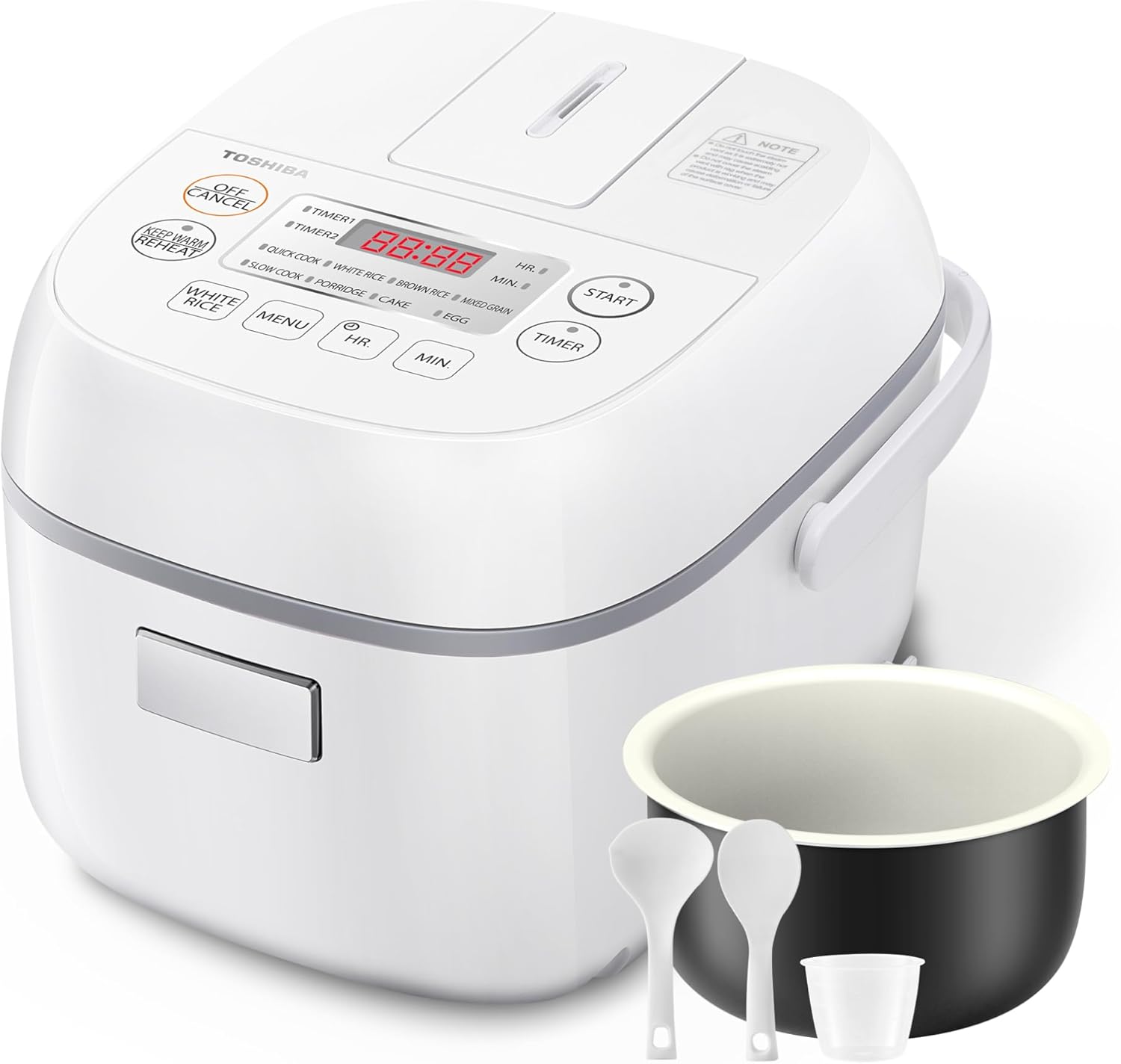
Most models include standard practical accessories such as a measuring cup, a serving spatula, and a soup ladle. Certain configurations also incorporate a dedicated steam basket for simultaneously steaming vegetables, fish, or dumplings while grains cook below.