Appliances · Buying Guide
Best West Bend Popcorn Maker Options for Movie Nights

Finding the right popcorn maker for home movie nights, parties, or everyday snacking involves looking closely at capacity, design, and heating style. West Bend offers a range of popcorn poppers designed to fit different household needs, from compact countertop units to traditional cart styles. Each model incorporates specific features like motorized stirring rods and nonstick surfaces to simplify the popping process and make routine cleaning straightforward.
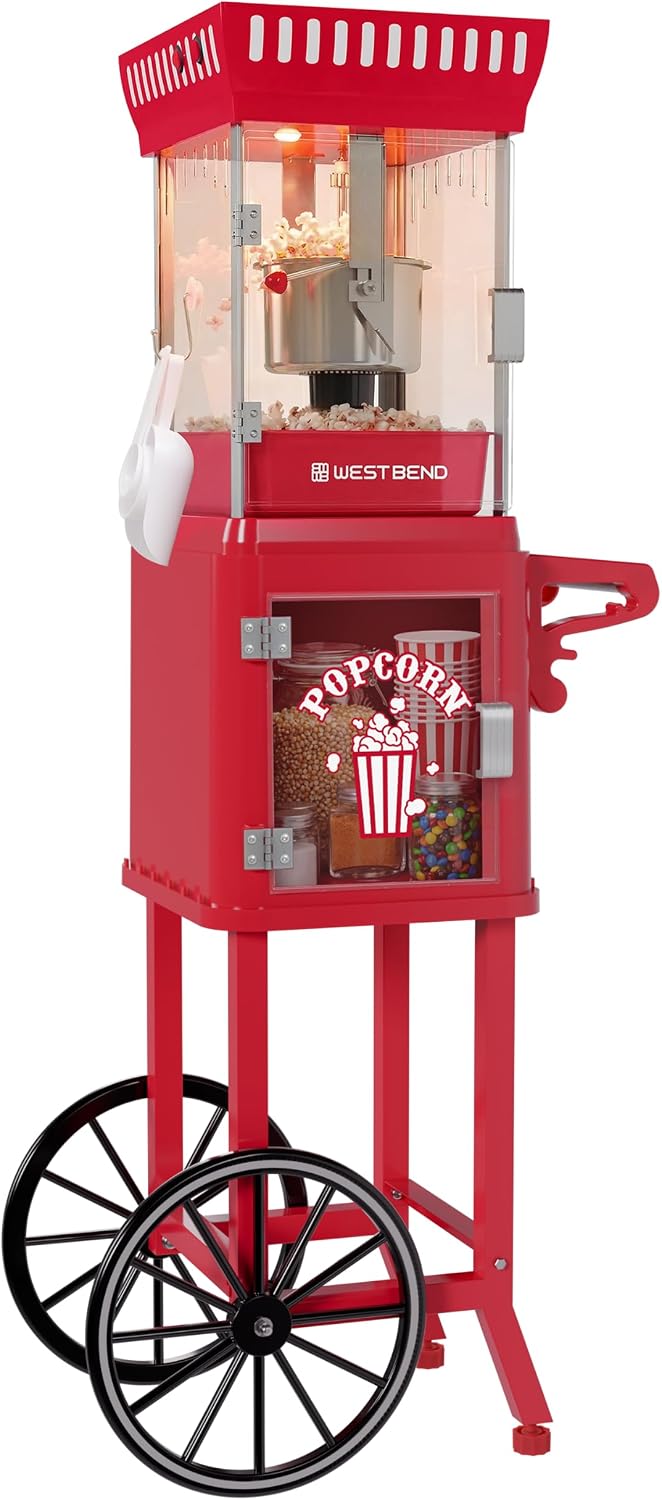
Whether you prefer a large 6-quart bowl design that flips over for immediate serving or a theater-style machine with a stainless steel kettle, understanding the physical attributes helps you choose wisely. Evaluating dimensions, materials, and batch sizes ensures the appliance matches your available counter space and entertaining style. Exploring the available options highlights practical differences in everyday operation and helps you select the ideal popcorn maker for your kitchen.
As an Amazon Associate, StacyLaughs earns from qualifying purchases.
Buying guide
Evaluating Capacity and Batch Size
Choosing the right popcorn maker capacity depends heavily on how many people you typically serve during family movie nights or weekend gatherings. Smaller household units produce around four quarts or ten cups per batch, which easily satisfies couples or modest groups without generating unwanted leftovers. Matching the batch volume to your usual snack habits prevents unnecessary delays when entertaining hungry guests.
Larger six-quart models accommodate expansive portions in a single run, reducing the need to restart the heating cycle mid-movie. Consider your household size and frequency of hosting before selecting a compact machine. Balancing batch output with your actual consumption ensures you spend less time standing in the kitchen and more time enjoying your favorite films with fresh snacks ready on hand.
Understanding Heating Styles and Kettles
Popcorn makers utilize different heating mechanisms, ranging from hot oil popping plates to enclosed stainless steel kettles. Hot oil models often feature motorized stirring rods with automatic reversal functions to keep kernels moving continuously. This mechanical action ensures thorough heat distribution and prevents unpopped kernels from scorching against the heated plate surface during standard operation.
Conversely, traditional kettle machines employ enclosed metal chambers equipped with quick-release levers and magnetic covers. These components let you dump freshly popped corn directly into a display area while containing stray hulls. Evaluating these heating styles helps you decide whether you prefer a straightforward bowl-style appliance or a classic cinema-inspired machine for your home kitchen counter.
Assessing Countertop and Floor Footprints
Physical dimensions play a critical role in determining where your new popcorn maker will live when not in active use. Compact bowl poppers generally have lower profiles that slip easily onto standard kitchen counters, though their horizontal width can still span over thirteen inches. Measuring your available workspace ensures the appliance housing fits comfortably without crowding other countertop culinary tools.
Taller theater-style machines and rolling carts demand careful vertical and floor space evaluations. A nineteen-inch countertop unit requires ample clearance beneath upper cabinets, while floor-standing carts need dedicated corner space. Assessing these spatial constraints beforehand prevents storage frustrations and ensures your chosen model integrates seamlessly into your home layout without causing everyday kitchen congestion.
Material Selection and Cleaning Routines
The construction materials of your popcorn maker directly influence its durability, weight, and everyday cleaning routine. Polycarbonate and plastic bowl designs offer lightweight handling and feature nonstick popping plates that wipe clean with minimal effort. Many of these lids are also dishwasher-safe, simplifying post-snack cleanup significantly for busy families who want quick maintenance after movie nights.
Stainless steel kettles and metal cart frames provide a robust, authentic aesthetic but require more attentive care. Nonstick kettle coatings simplify interior wiping, while removable trays help manage stray oil and unpopped hulls. Reviewing these material properties helps you select a machine that matches your willingness to perform routine upkeep versus seeking maximum cleaning convenience.
Storage Options and Portability Features
If your kitchen storage is limited, prioritizing compact nesting designs or built-in cord wraps can make cabinet placement much easier. Bowl-style poppers often feature stackable components that reduce vertical storage bulk, allowing them to tuck neatly into standard pantry shelves. Evaluating whether a machine disassembles easily helps prevent awkward clutter in small kitchens.
For dedicated game rooms or entertainment spaces, portable carts with large wheels and ergonomic handles offer effortless mobility. These rolling designs let you wheel the popcorn station wherever snacks are needed most. Weighing portability against permanent placement helps you determine whether a stationary countertop appliance or a mobile cart fits your entertaining lifestyle best.
Integrated Accessories and Serving Molds
Built-in accessories can significantly enhance your popcorn-making experience by streamlining preparation and serving tasks. Many models include dedicated measuring tools, serving scoops, and kernel catcher trays that capture unpopped hulls automatically. These thoughtful additions ensure you have the right utensils on hand immediately without needing to hunt through kitchen drawers for extra measuring cups.
Dual-purpose lids that transform directly into serving bowls eliminate the need for extra dishware, reducing cleanup after the movie ends. Some vented covers even incorporate butter melting wells to season your snack as it pops. Examining these integrated features helps you choose a machine that maximizes convenience from the initial kernel measurement to the final handful.
Frequently asked questions
How do motorized stirring rods improve popcorn popping performance?
Motorized stirring rods play a crucial role in hot oil popcorn makers by continuously moving kernels across the heated popping plate. This constant motion ensures that heat is distributed evenly throughout the batch, which dramatically reduces the number of unpopped kernels left behind. Furthermore, automatic reversal functions prevent kernels from getting jammed or scorching against the hot surface. By keeping everything circulating smoothly, the stirring mechanism delivers a higher volume of fluffy, evenly cooked popcorn while minimizing burnt pieces, making your snack preparation effortless and reliable.
Can I melt butter while the popcorn is popping?
Many bowl-style popcorn makers feature a clear vented lid equipped with a built-in butter melting well specifically designed for this purpose. As the popcorn heats and pops inside the chamber, the warmth rising through the vents softens your butter sitting in the top well. This allows the melted butter to drip down evenly over the batch during the popping process. However, you should always follow manufacturer guidelines regarding maximum butter quantities to prevent overflow and ensure safe operation while using your hot oil machine.
What is the difference between bowl poppers and cart-style makers?
Bowl poppers and cart-style popcorn makers serve different aesthetic preferences and spatial requirements in the home. Compact bowl units typically sit directly on kitchen countertops, featuring lightweight polycarbonate or plastic construction with dual-purpose lids that double as serving bowls. In contrast, cart-style machines offer a vintage theater appearance complete with rolling wheels, a metal frame, and an enclosed stainless steel kettle. Carts require dedicated floor space and provide built-in storage cabinets, whereas bowl poppers prioritize easy countertop placement and simplified cabinet storage.
How should I clean and maintain my popcorn maker after use?
Proper cleaning and maintenance depend on the specific materials of your popcorn maker. For bowl-style poppers, the nonstick popping plate typically wipes clean easily with a damp cloth once cooled, and many plastic lids are dishwasher-safe. Kettle-style machines require wiping down the stainless steel interior and emptying the kernel catcher tray after each use to prevent residue buildup. Always unplug the appliance and allow all heated components to cool completely before attempting any maintenance, ensuring your machine remains in top operating condition for future snack sessions.
Do I need special kernels or oil for these popcorn poppers?
Hot oil popcorn makers and kettle machines generally accommodate standard popping corn kernels and regular cooking oils with good high-heat properties, such as canola, coconut, or vegetable oil. You do not necessarily need specialized gourmet kernels, though standard yellow or white popping corn works efficiently with the motorized stirring systems. It is important to measure both oil and kernels according to the manufacturer instructions provided with your specific machine model to prevent overcrowding the popping plate and to achieve optimal fluffy results every single time.