Appliances · Buying Guide
Best Zojirushi Bread Maker Options and Alternatives for Fresh Loaves
Baking fresh bread at home transforms everyday meals, offering rich aromas and customized ingredients without commercial additives or preservatives. Whether you want a simple white loaf, whole grain varieties, or specialty gluten-free options, modern countertop appliances simplify the entire mixing, kneading, and baking cycle from start to finish.
Finding the right machine involves carefully evaluating capacity, program variety, and overall footprint on your kitchen counter. This overview examines several leading automatic bread makers, including prominent Zojirushi models and alternative machines, detailing their standout design attributes to match your daily household baking routines and dietary preferences.
As an Amazon Associate, StacyLaughs earns from qualifying purchases.
Buying guide
Evaluating Countertop Footprint and Kitchen Space
Choosing an automatic bread maker requires measuring your available counter space and storage cabinetry. Models vary significantly in width, depth, and vertical height, with high-capacity dual-blade units often spanning eighteen inches across. If your kitchen features limited surface area, a narrower vertical design or a compact sixteen-ounce model prevents countertop congestion.
Consider how frequently you plan to use the appliance and whether it will remain permanently plugged in or stored away between baking sessions. Heavy stainless steel housings offer excellent stability during high-speed kneading cycles but demand more lifting effort if stored inside lower kitchen cabinets.
Understanding Capacity and Household Loaf Requirements
Bread maker capacities typically range from sixteen ounces up to two full pounds. Selecting the correct size depends directly on how fast your household consumes fresh bread. Smaller one-pound machines produce modest loaves that prevent staleness in single-person households or couples.
Larger two-pound appliances accommodate growing families, sandwich-prep routines, and multi-day meal planning. Keep in mind that larger capacities require more powerful motors, heavier kneading blades, and increased wattage to process dense whole grain or multigrain dough mixtures evenly without stalling.
Comparing Program Variety and Customization Settings
Modern bread machines offer anywhere from seven to fifteen preset programs tailored for specific recipes like white bread, whole wheat, French dough, gluten-free mixes, jams, and cakes. Basic units handle everyday baking effortlessly, while advanced appliances include specialized courses for sourdough starters and artisan doughs.
For bakers who like experimenting with unique recipes, models featuring homemade memory slots allow you to program exact custom durations for kneading, rising, and baking phases. Evaluate your culinary goals to determine whether standard presets satisfy your needs or if programmable memory settings are essential.
Pan Materials and PFAS-Free Coating Considerations
Baking pan construction directly affects bread release, even thermal transfer, and cleanup ease. Many modern machines incorporate advanced nonstick coatings or PFAS-free ceramic surfaces to ensure loaves slide out cleanly after baking without leaving stubborn crust fragments behind.
When reviewing pan maintenance, check whether components are rated for automated dishwasher cycles or require gentle hand washing. Following manufacturer cleaning guidelines protects specialty nonstick and ceramic coatings, extending the functional lifespan of your baking pan and preserving easy food release over years of use.
Automatic Dispensers and Convenience Features
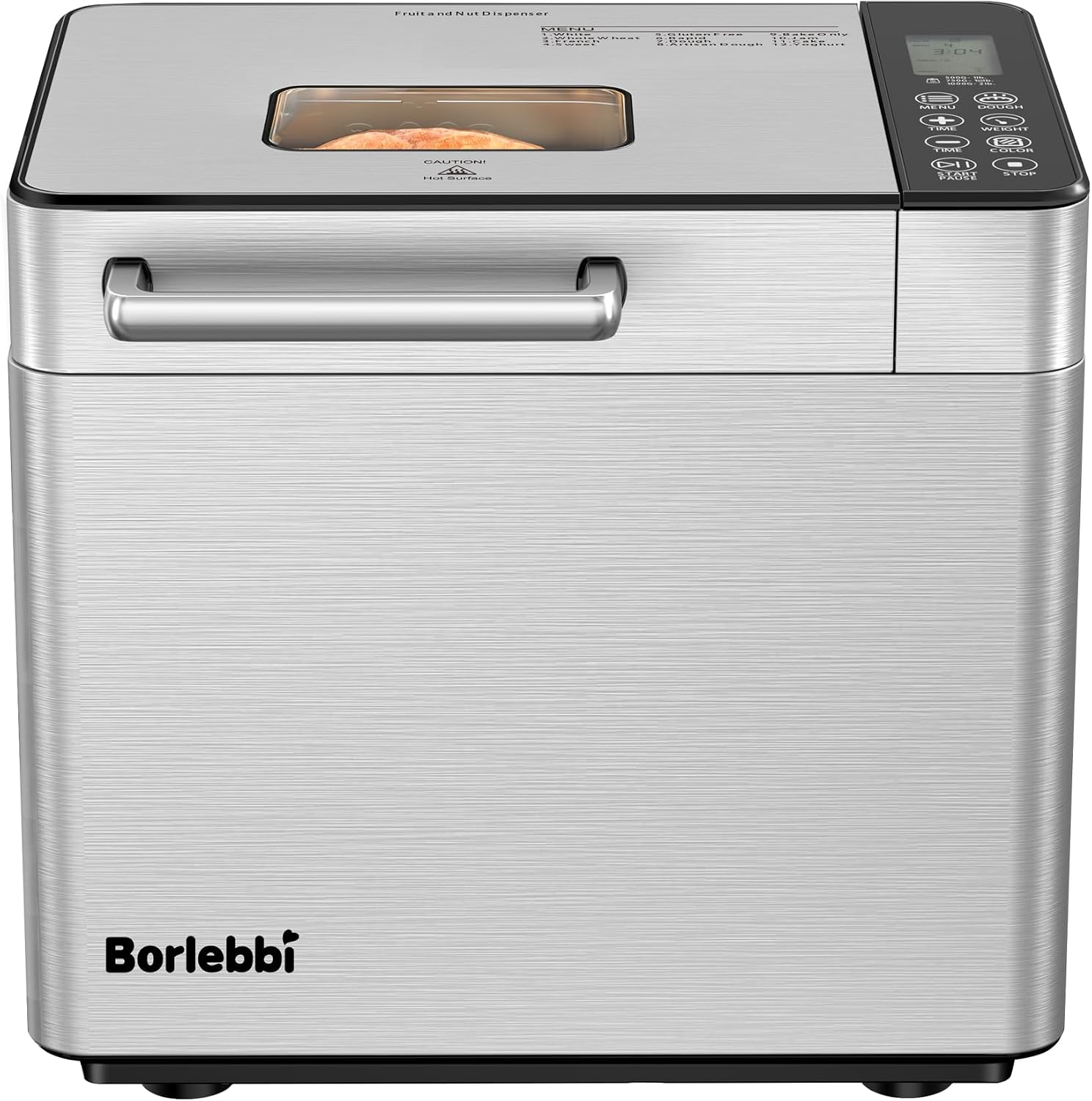
Specialized features like built-in fruit and nut dispensers add convenience by automatically releasing seeds, raisins, or chopped nuts into the dough at the optimal moment during the mixing cycle. This eliminates the need to listen for manual beep alerts and drop mix-ins by hand.
Other helpful conveniences include digital LCD screens with clear key codes, interior viewing windows with lights, audible alerts for paddle removal, and extended keep-warm functions that maintain loaf temperature if you are delayed returning to the kitchen.
Timing Controls and Delay Start Programming
Delay timers transform your daily routine by allowing you to load flour, yeast, and liquids into the pan the night before and schedule the baking cycle to finish by morning. Most reliable machines offer a twelve to thirteen-hour delay clock.
When utilizing delay start functions, always follow recipe ordering rules by placing liquids at the bottom and dry yeast away from moisture until mixing begins. This ensures active yeast performance and prevents premature rising when scheduling fresh bread for breakfast or dinner.
Frequently asked questions
Can I bake gluten-free bread in these automatic bread makers?
Many modern bread makers include a dedicated gluten-free course setting specifically calibrated for alternative flour mixtures. Because gluten-free dough requires different mixing and rising characteristics compared to traditional wheat flour, selecting a machine with a specialized gluten-free program helps ensure proper texture and even baking results without requiring manual adjustments during the cycle.
What is the purpose of dual kneading blades versus single blades?
Dual kneading blades are typically found in larger two-pound machines to thoroughly process heavy, dense doughs like whole wheat or multigrain mixtures across a wider pan footprint. Single blades work efficiently in compact vertical pans or smaller one-pound capacities where the dough volume is lower and easier for a single central paddle to circulate.
How do automatic fruit and nut dispensers operate during a bake?
Automatic ingredient dispensers hold dry mix-ins like raisins, walnuts, or seeds in a small compartment on the lid. During the kneading phase, the machine mechanically releases these items into the dough chamber at the precise programmed moment, ensuring even distribution throughout the loaf without requiring you to monitor the baking cycle.
Are baking pans and removable components dishwasher safe?
Cleaning requirements vary by model, with some appliances featuring dishwasher-safe removable parts while others specify hand washing only to protect delicate nonstick or ceramic pan coatings. Always review the manufacturer product care instructions before placing parts in an automatic dishwasher to maintain coating integrity and prevent premature wear.
How does a delay timer function on countertop bread machines?
A delay timer allows you to load ingredients into the baking pan hours in advance and set a countdown clock so the machine finishes baking right when you want it. This feature relies on keeping dry yeast separated from liquids until the internal timer initiates the primary mixing cycle for fresh morning loaves.