Appliances · Buying Guide
Best Zojirushi Neuro Fuzzy Rice Cooker Options for Every Kitchen
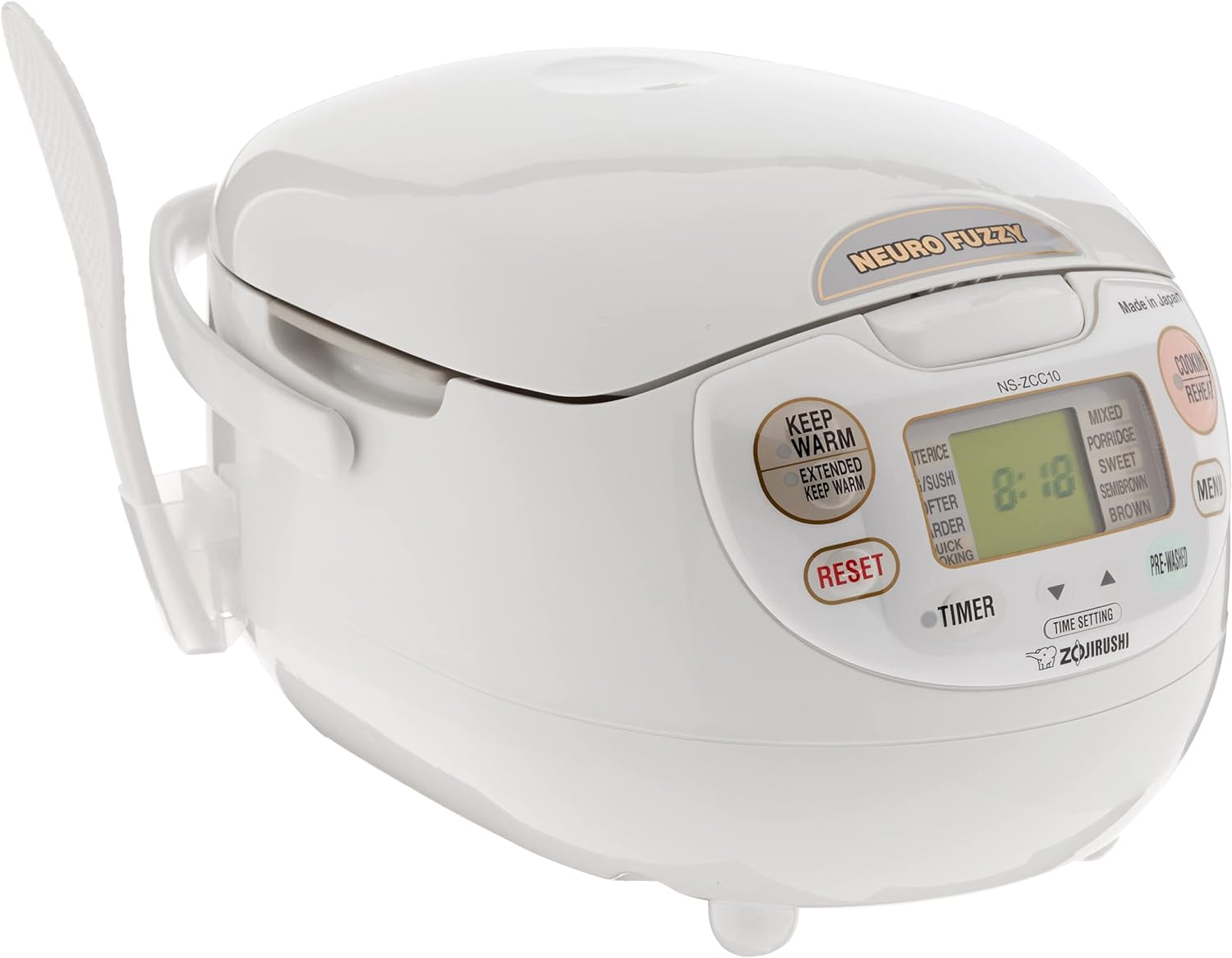
Selecting the right zojirushi neuro fuzzy rice cooker depends heavily on your household size and the specific varieties of grains you prefer to prepare on a regular basis. These computerized kitchen appliances use advanced programming to adjust cooking temperatures and heating times automatically, helping achieve consistent results across different grain types without manual guesswork.
Whether you need a compact countertop model for smaller single portions, a standard five-and-a-half-cup device, or a larger ten-cup capacity unit for hosting family gatherings, understanding the distinct menu settings helps match a machine to your daily cooking habits. Reviewing these specifications makes it easier to select a practical appliance for your specific kitchen space and cooking routines.
As an Amazon Associate, StacyLaughs earns from qualifying purchases.
Buying guide
Determining Capacity Needs
Choosing the correct capacity ensures your appliance matches your household size without taking up unnecessary kitchen space. Compact three-cup models suit singles, couples, or smaller living spaces where daily portion requirements remain modest. Five-and-a-half-cup units easily handle standard family meals and everyday cooking requirements without demanding excessive counter space during busy weeknights.
Larger ten-cup cookers serve households that frequently host guests, large families, or anyone who enjoys preparing large batches of grains in advance. Carefully assess your typical portion sizes, dining habits, and storage availability before selecting a specific model to balance daily cooking convenience with efficient kitchen organization.
Understanding Computerized Heating Technology
Advanced heating technologies use computerized microprocessors to monitor and adjust cooking temperatures dynamically throughout the entire cooking cycle. This automated approach eliminates manual guesswork, ensuring that different rice varieties achieve optimal texture without burning or undercooking. Sensitive components inside the cooker respond to subtle temperature shifts in real time.
Whether utilizing specialized Neuro Fuzzy logic or standard micro computerized systems, these appliances adapt seamlessly to internal moisture changes during operation. Reviewing these technological capabilities helps buyers understand how internal sensors maintain consistent grain quality across multiple menu settings for reliable daily meal preparation.
Evaluating Menu Settings and Grain Types
Different rice cookers offer varied menu selections tailored to specific grains like regular white rice, brown rice, sushi rice, and porridge. Selecting a model with comprehensive menu options allows you to experiment with diverse grain recipes easily at home while maintaining reliable cooking results across every single batch you prepare daily.
Certain compact and standard units feature specialized settings for steel-cut oats or GABA brown rice nutrient activation. Matching the available program selections to your household meals ensures the appliance fully supports your personal dietary preferences without requiring manual conversions or complicated cooking adjustments during busy weekly routines.
Convenience Features and Storage Options
Built-in retractable power cords and fold-down carrying handles significantly simplify moving and storing your rice cooker safely after cooking is complete. These thoughtful physical design elements reduce unsightly countertop clutter and make transporting the appliance much more manageable when transitioning between tight cabinet storage locations and active counter spaces.
Automatic keep-warm cycles, extended keep-warm modes, and programmable delay timers add valuable scheduling flexibility to your daily cooking routine. Carefully evaluating these practical convenience features helps you find a model that fits seamlessly into your kitchen environment without creating extra hassle during busy meal preparation windows or large family dinners.
Maintenance and Cleaning Guidelines
Proper maintenance ensures your rice cooker remains functional over years of regular use in busy home kitchens. Most models feature durable nonstick inner cooking pans and smooth exterior surfaces that wipe down easily with a damp cloth or require gentle hand washing according to manufacturer guidelines to protect delicate coatings from damage.
Detachable inner lids and clear-coated stainless steel outer surfaces further simplify routine cleanup tasks after family meals are finished. Carefully following manufacturer care instructions preserves the longevity of internal heating components and maintains optimal cooking performance across all your favorite grain recipes without ever experiencing premature wear or surface issues.
Footprint and Kitchen Space Planning
Evaluating the physical dimensions and weight of a chosen rice cooker helps ensure it fits comfortably on your kitchen countertop or inside storage cabinets. Larger capacity models require significantly more surface area during operation and demand careful consideration of overhead clearance beneath upper kitchen cabinets during active cooking cycles every single day.
Measuring your available kitchen space beforehand prevents storage conflicts and ensures easy access to electrical power outlets and built-in retractable power cords. Balancing cooking capacity with your overall kitchen footprint leads to a much more satisfying long-term ownership experience over time without unexpected spatial surprises or frustrating placement limitations in daily life.
Frequently asked questions
Why must I use the specific measuring cup included with the rice cooker?
Rice cooker manufacturers calibrate their water-to-rice ratios and internal sensor calculations based on the exact volume of the specific measuring cup provided with the appliance. Standard kitchen measuring cups vary slightly in volume, which can disrupt the precise liquid measurements needed for computerized fuzzy logic systems. Using the included cup ensures that your water levels remain accurate for every batch, preventing undercooked or overly soggy grains. Always rely on the dedicated cup that comes inside the box rather than standard kitchen tools to achieve the most consistent cooking results.
Can I cook grains other than white rice in these models?
Yes, many Zojirushi computerized rice cookers feature multi-menu settings designed for various grains, including brown rice, semi-brown rice, mixed grains, porridge, and sweet rice. Some compact models even include specialized settings for steel-cut oatmeal and GABA brown rice nutrient activation. However, you should always consult the specific menu options available on your chosen model before preparing alternative grains. Selecting the correct menu program ensures the internal microprocessor adjusts its cooking temperature and timing appropriately for the specific grain type you are preparing.
How do the automatic keep-warm and extended keep-warm functions operate?
After the cooking cycle finishes, the appliance automatically switches to a keep-warm mode to maintain an ideal serving temperature without drying out or burning the food. The extended keep-warm function maintains this temperature over a longer duration for added convenience when meals are delayed. These features use internal sensors to regulate heat gently within the inner pan. While this keeps cooked grains warm and ready to serve for hours, you should review manufacturer recommendations regarding maximum hold times to ensure optimal food quality and texture over extended periods.
What is the difference between compact three-cup models and larger ten-cup models?
The primary difference lies in physical capacity and overall footprint on your kitchen countertop. Compact three-cup models suit singles, couples, or smaller households preparing modest portions, and they often feature specialized settings like steel-cut oatmeal. Larger ten-cup models accommodate high-volume cooking for big families or hosting dinner parties, but they require substantial counter space and wider storage clearance. Your choice depends entirely on how many people you typically cook for and the amount of available space in your kitchen cabinets and countertops.
How should I clean and maintain my rice cooker after use?
Regular maintenance involves wiping down the smooth exterior surfaces with a damp cloth and washing the nonstick inner pan according to the manufacturer care instructions, which typically recommend hand washing rather than automatic dishwasher cycles. Many models feature detachable inner lids that can be removed for thorough cleaning. Always ensure components are completely dry before reassembling or storing the appliance. Following these basic upkeep steps protects delicate nonstick coatings, prevents buildup, and helps maintain reliable heating performance over years of regular kitchen use.